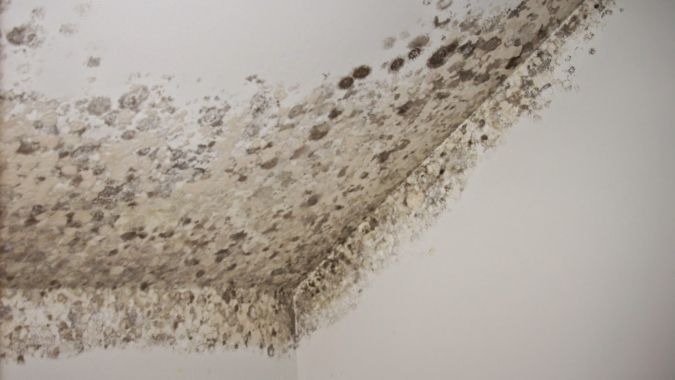
Thermal bridges and damp
Following on from our previous article on thermal bridges, this article approaches the subject from a different angle.
In a lawsuit, the expert for a defendant architect (himself an architect) tells us that, owing to numerous “complaints” from the “neighbours” in a building he inspected about air infiltration through the windows and damp caused by thermal bridges around the frames, he analysed their condition with a thermal imaging camera. Untrue. It was not because of neighbours’ complaints, but because of the reality of a lawsuit claiming that the architect was liable for thermal bridges, due to the appearance of blackish stains, mould and fungus inside the homes in the areas adjoining the building’s façades. There are 36 homes affected. And they are not “neighbours”: it is the owners who are bringing the claim.
The expert goes on to say that these thermal images provide objective data on the different surface temperatures of the elements photographed (correct). And that this technology does indeed show graphically, using a colour scale, the difference between cold and warm elements in the image. Red is warm, blue is cold.
The expert states that he carried out a thermographic survey of all the windows in the 36 homes visited but, by way of example, he picks one and shows the thermographic data obtained: intense blues and reds coinciding with damp, cold, and the mould and fungus around the window frames.
And here comes the miracle. His conclusion: nobody is to blame!
The expert says that THE THERMAL BRIDGES COMPLY WITH THE CTE, WITH JUSTIFICATION OF COMPLIANCE WITH THE LIMITATION OF ENERGY DEMAND (SECTION HE-1 OF THE CTE).
Although the expert himself admits that the thermal images show thermal bridges around the façade windows (bluish edges), he states that these thermal bridges do not in themselves constitute a construction defect. That it is an aesthetic defect. And that these thermal bridges follow the very construction logic of joining building elements with different characteristics (?…), calculated as part of the building’s overall thermal envelope, an envelope used to check whether that thermal envelope meets the CTE’s energy demand values. What is he talking about? And what does this have to do with anything?
To prove such nonsense, he squanders no fewer than …… pages of the report he submits to the court. He adds that the thermal bridges created where the joinery meets the wall are perfectly compatible with the “construction logic” of fixing external joinery to its façade wall. These thermal bridges are controlled, and their inclusion in the overall calculation of compliance with the CTE’s Energy Saving requirements shows that the homes meet the maximum permitted energy demand parameters of the CTE. It has therefore been demonstrated, he says, that the installation of the external joinery in this building involves no pathology whatsoever. And he is perfectly satisfied with that.
He goes on to say that the calculation is obtained because the building’s thermal envelope meets the quality standards set by the CTE, which shows that the thermal bridges naturally present where the windows join the façade are not a construction defect in the building covered by his report.
Next, he presents regulatory compliance data obtained with an engineering calculation program for the home examined, and so concludes that all the homes comply with the CTE. He uses …. unintelligible pages to prove it, and concludes that the Technical Building Code requires outside air to be brought constantly and continuously into the homes through their façades, to achieve proper ventilation of the interior living spaces. This intake of outside air is directly linked to the extraction from inside the homes to the outside of a volume of stale air identical to the air taken in. So much so, he continues, that the intake of outside air is produced by the negative pressure created inside the homes by the ventilation system’s main extractors, connected to the extract grilles located in the wet rooms of each home.
We do not want to bore you with the expert’s tremendous waffle; what a waste of words, and what a pity that he takes no account whatsoever of the conclusive and instructive thermal images and photographs which, to any layperson, show, repulsively, the black spots on the walls, how unhealthy it is to live in a damp environment prone to colds, unhealthy for children and a trigger for asthma. But with the expert’s waffle, case closed: nothing is wrong, and the regulations are complied with.
We cannot let such a farce pass, which could never be justified by the customary support for a colleague or friend, by professional corporatism, or even by defending the interests of the insurance companies at all costs. WHAT NONSENSE! We have already summarised in other articles what thermal bridges are, and what case law says about them. If you are interested, click to see them. But regardless of the outcome of the lawsuit, we cannot stay silent in the face of such brazen effrontery.
You can tell us about your case so that we can study it and advise you, free of charge and with no obligation on your part.
Any questions?