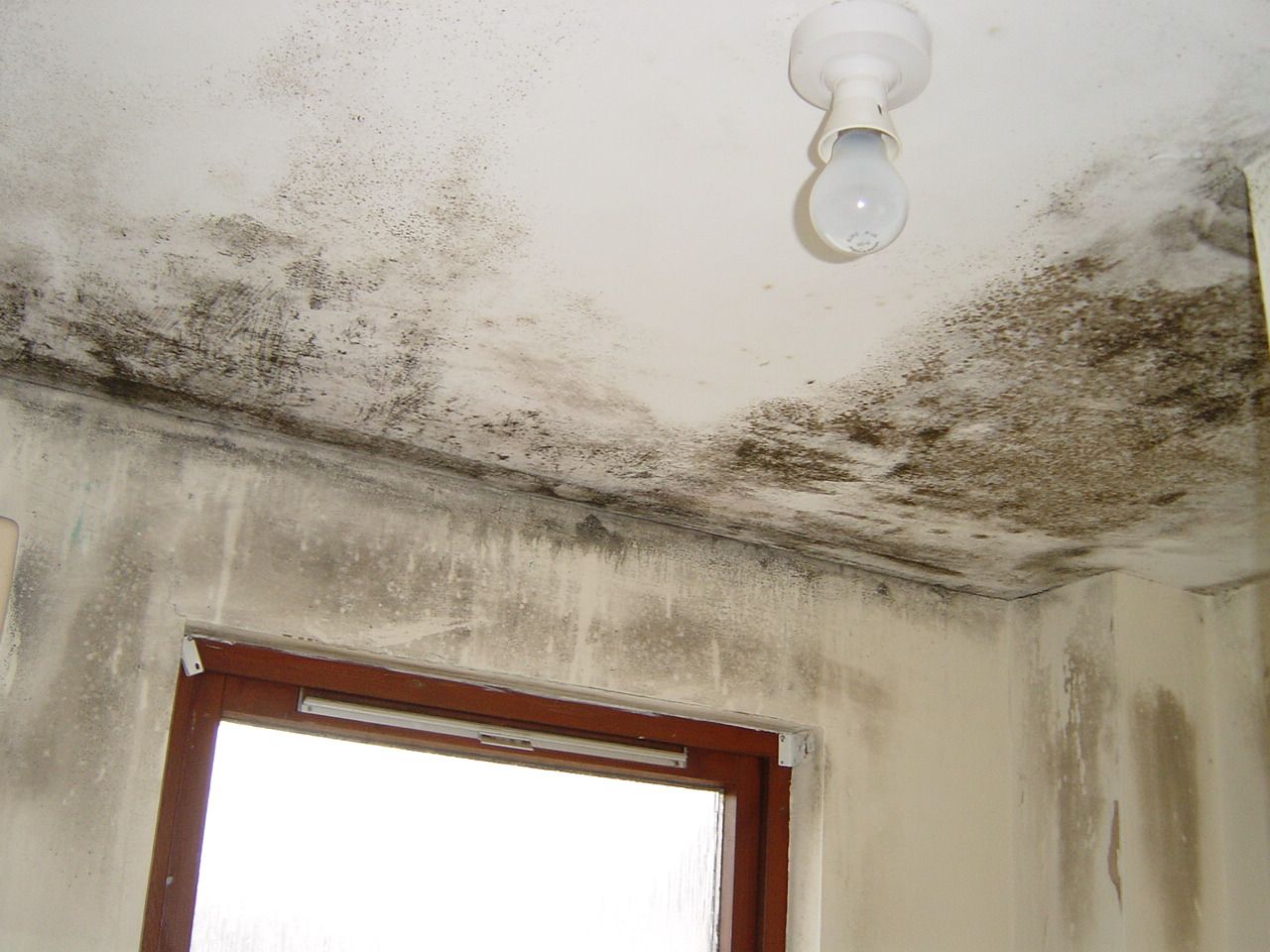
Condensation damp results from water vapour trapped in the capillaries of walls, partitions or cladding because of the difference between the temperature inside the building and outside. It usually shows as fungal colonies (black spots), as small droplets (as if the wall were sweating), or as bubbles or blisters in the paint. It is mainly due to the necessary thermal insulation not having been installed (because it was not provided for in the project or was not executed), so the temperature difference between the outside and the inside of the building is transmitted through areas prone to thermal bridges.
Causes of condensation damp
Condensation damp is caused by the difference in temperature between a warm interior and a cold exterior, transmitted through so-called “thermal bridges”. This contrast makes the excess water vapour in the air condense. This is known as the cold wall effect, like the droplets left on a mirror after a shower. Thermal bridges, the elements through which this temperature difference is transmitted, must be avoided during construction by means of thermal insulation, special materials such as window frames with a thermal break, air chambers, etc.
A very common reaction from builders or developers when condensation damp appears is to blame the owners: that the rooms are not ventilated enough, that they should be ventilated more, and that excessive use of heaters “overloads” the air, producing condensation droplets in contrast with the outside temperature. Such explanations and excuses should not be accepted. A homeowner should be able to heat their home to a comfortable level, ventilating sensibly, but without having to leave the windows open frequently, with the great loss of heat that entails. The real problem is thermal bridges, which must be avoided with appropriate construction techniques.
Claim deadlines for condensation damp
As condensation damp affects the habitability of the property, the Spanish Building Act (LOE) gives a legal guarantee period of 3 years to claim for it, under Article 17.1.b of the LOE. Once the damp has become apparent (by means of a demand served on those involved in the construction), a period of 2 years runs from then to bring a claim against those responsible, under Article 18 of the LOE.
Furthermore, in the case of serious defects and flagrant breaches (of the building specifications, for example), a claim for contractual liability can be brought against the developer-seller of the building, who is liable for 5 years under Article 1964.2 of the Civil Code.
Claiming for condensation damp in buildings
DPCON S.L. will send an expert to your home. Once the origin of the damp has been verified and an expert report drawn up, our legal department will take charge of claiming for the damage from those responsible, filing a legal claim so that they either repair it or bear the cost of the repair. Normally this takes the form of compensation, equal to the value of the repair, paid by the defendants (or through their insurers).
Our lawyers specialise in construction law and have extensive experience in claiming for this type of damage. We have successfully handled many cases all over Spain, obtaining numerous judgments ordering those responsible to compensate the owners so that the condensation damp they suffer is put right in the most suitable and lasting way.