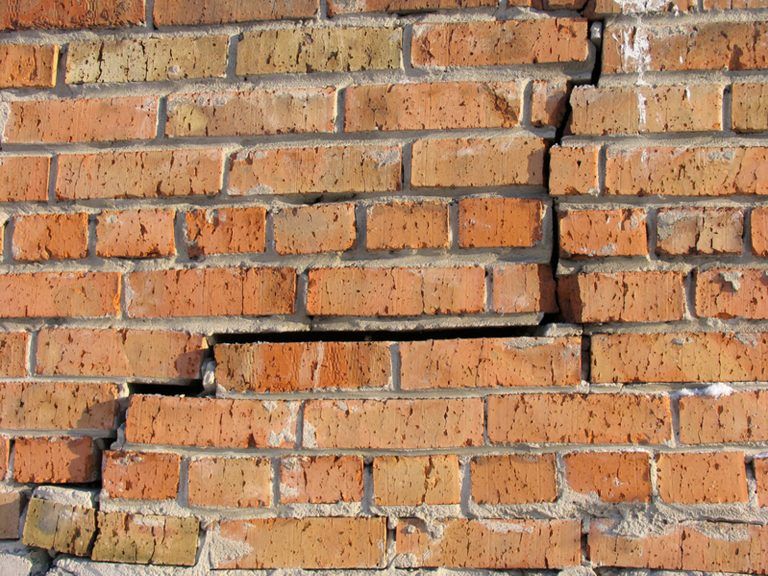
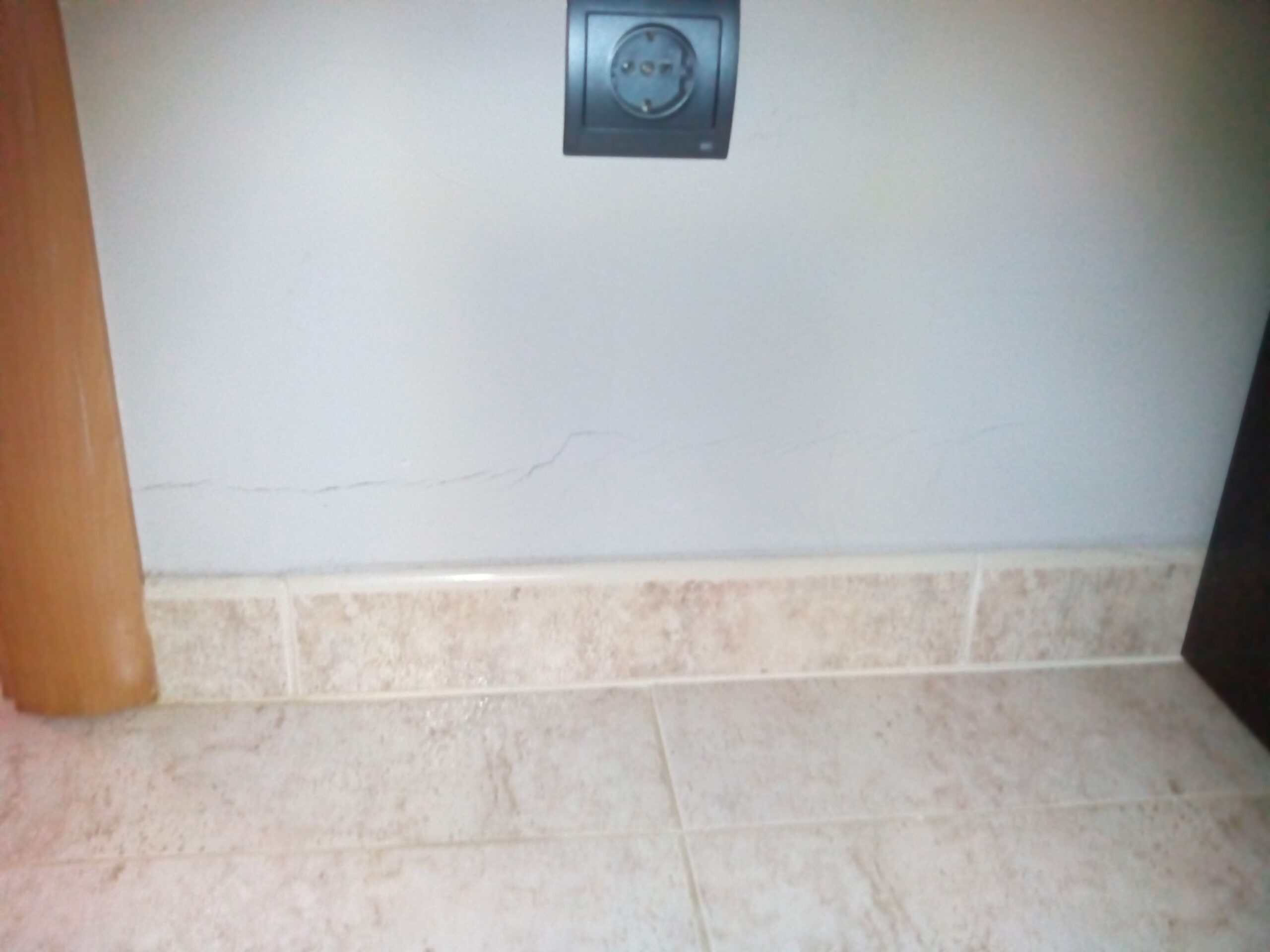
Horizontal cracks in walls are one of the most common defects in newly built homes. They usually appear within the first few years as fine, straight lines running along a partition wall, often close to the ceiling, at skirting-board height or following the joint between two different materials.
In most cases they do not compromise the stability of the building, but they are still a construction defect: they reveal a workmanship or design problem, spoil the finishes, can let damp in and tend to come back if they are simply painted over. That is why an expert should find out what is causing them before they are repaired and, if the cause lies in the construction, the repair should be claimed from whoever is responsible.
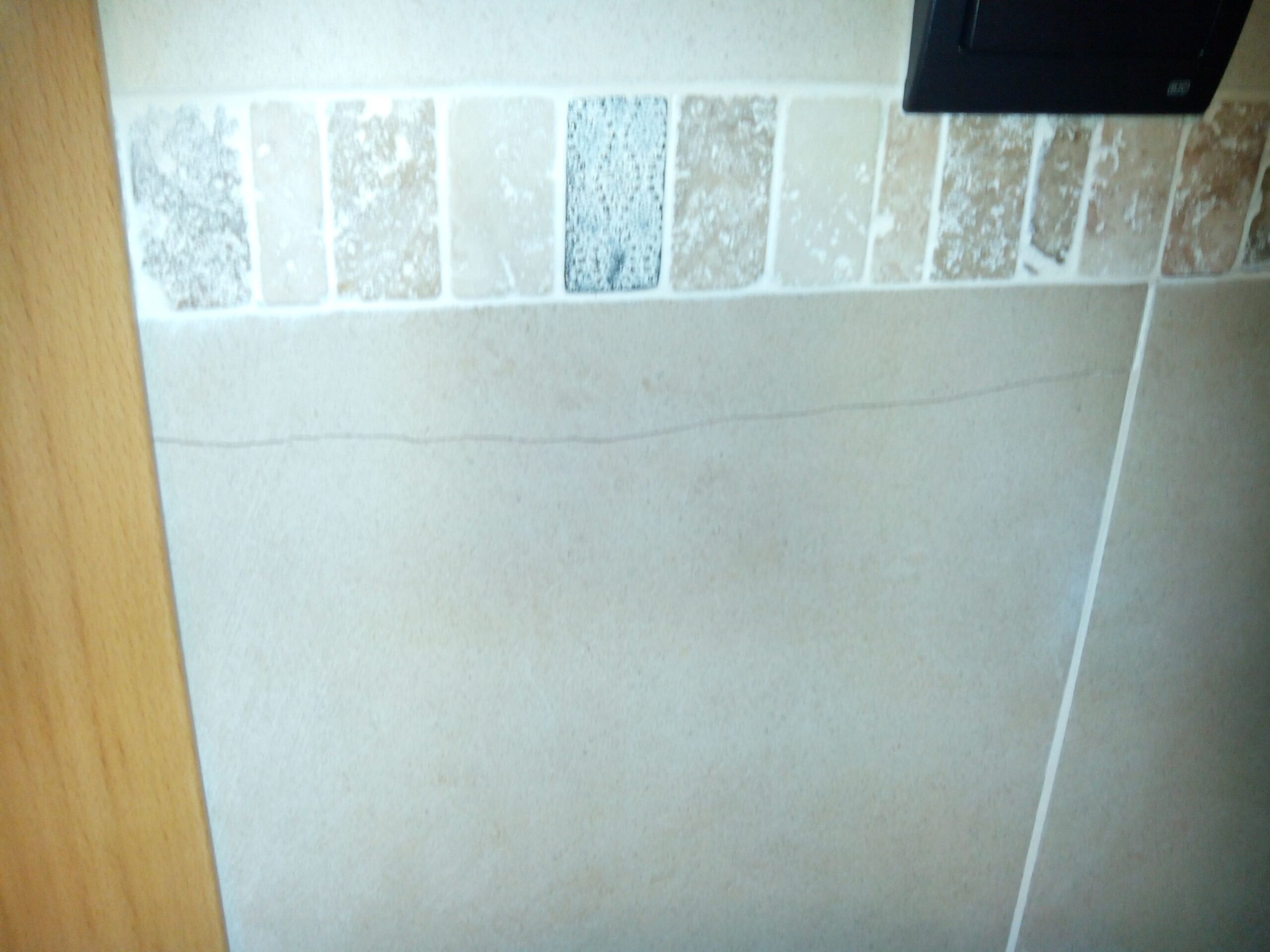
Why do horizontal cracks appear in walls?
These are the causes we find most often in our expert reports:
- Deflection of the floor slab. When the slab above bends more than expected, it bears down on the partition wall and cracks it horizontally next to the ceiling. If it is the slab below that sags, the crack appears lower down, close to the floor.
- No movement joint between wall and structure. If the partition is built tight against the slab, with no joint to absorb movement, any expansion or deflection turns into a crack.
- Junctions between different materials. Brick and concrete, or masonry and plasterboard, move differently with temperature and humidity. Without reinforcing mesh at that junction, the crack follows the line where they meet.
- Poorly finished plasterboard joints. In plasterboard partitions, a straight horizontal crack usually coincides with a joint without tape or with boards that were not screwed properly.
- Service chases. Horizontal chases cut for pipes or cables and badly filled end up showing through the plaster.
- Shrinkage of mortars and plasters applied in coats that are too thick or without allowing proper drying times.
Hairline crack or structural crack?
A hairline crack is a fine, surface opening less than a millimetre wide that affects the plaster or the partition wall. A structural crack is wider, runs right through the element and may be a sign that the structure is moving.
Call an expert as soon as possible if the horizontal crack:
- appears in a load-bearing wall or on the façade rather than in an internal partition;
- gets wider over time or continues diagonally or in a stepped pattern;
- comes with doors that stick or will not close, uneven floors or walls that lean;
- is repeated on several floors or in neighbouring homes.
In those cases it may be structural cracking, which follows a different claims procedure. To find out whether a crack is still active, the expert fits tell-tales or crack monitors and tracks how it develops over several weeks.
Time limit for claiming horizontal cracks
If the cracks are caused by a defect in the building elements that affects the habitability of the home, the parties involved in the construction are liable for 3 years from the handover of the works (article 17.1.b of the LOE). If they only affect the finishes, the building contractor is liable for 1 year, and if they have a structural cause the guarantee is 10 years.
Once the damage has appeared within those periods, you have 2 years to bring legal action (article 18 of the LOE). Against the developer who sold the property, there is also a contractual liability claim, with a five-year time limit. If you have doubts about your case, contact us as soon as possible: the time limits run from the moment the damage appears.
How to claim for cracks from the contractor or developer
- Take dated photographs of the cracks, note when they appeared and watch whether they grow.
- Commission an expert report establishing their cause, how serious they are and what the repair will cost.
- With the report, send a formal demand (burofax) to the developer and the building contractor asking them to repair them.
- If there is no response or agreement, our lawyers file the claim and the expert defends the report in court.
Cracks rarely come alone: if your home also has damp, noise or problems with its installations, it makes sense to include them in the same habitability damage claim.
Have cracks appeared in your home?
A DPCON expert architect will inspect the cracks, find out what is causing them and tell you whether you can claim for them, and from whom.
Other types of cracks
See also the other types of cracks we claim for:

Ceiling cracks
Cracks caused by slab deflection, in plaster ceilings and in plasterboard false ceilings.