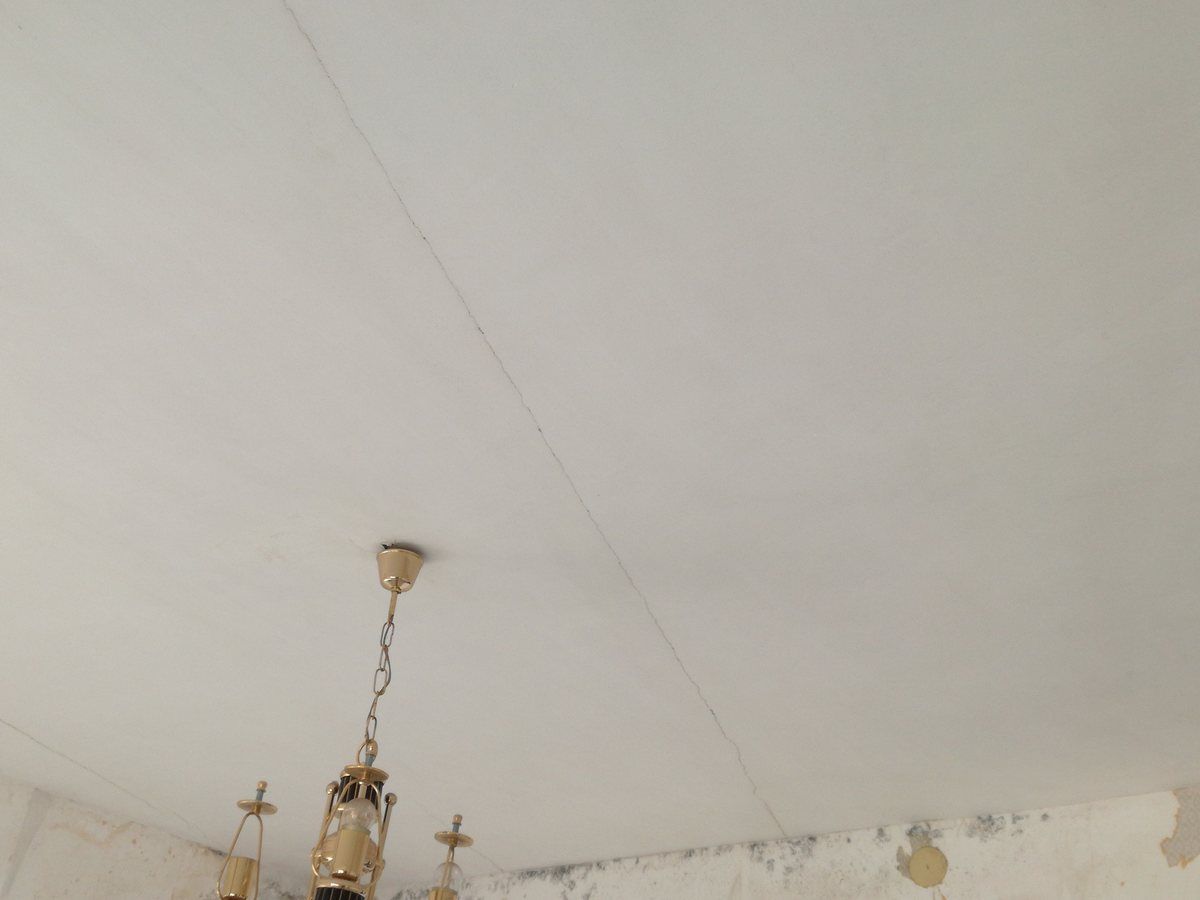
A fine line running across the living-room ceiling, parallel cracks repeated at the same spacing, or an outline marked where the ceiling meets the walls. Ceiling cracks are a common defect in newly built homes and, although they are often not dangerous, they almost always have a construction-related cause that can be claimed for.
A ceiling reflects the floor slab above it: when the slab deflects, or when the plaster, the decorative plaster ceiling or the plasterboard has not been installed correctly, cracks will appear sooner or later. That is why it is important for an expert to establish their cause before any painting or repairs, and to record the damage so that it can be claimed for.
Causes of ceiling cracks
- Floor slab deflection. If the slab deflects more than is acceptable, the ceiling finish cracks. It is typical to see parallel, evenly spaced cracks following the direction of the joists.
- False ceiling joints. In plasterboard or plaster ceilings, straight cracks usually coincide with joints without tape, poorly fixed boards or the lack of perimeter and movement joints.
- Junction with the walls. Cracks tracing the edge of the ceiling are caused by different movements between the slab and the partitions when no joint was left to separate them.
- Movement under the roof. On the top floor, temperature changes in a poorly insulated roof move the slab and crack the ceiling.
- Plaster shrinkage when it is applied in coats that are too thick or without mesh at weak points.
Ceiling cracks with damp stains
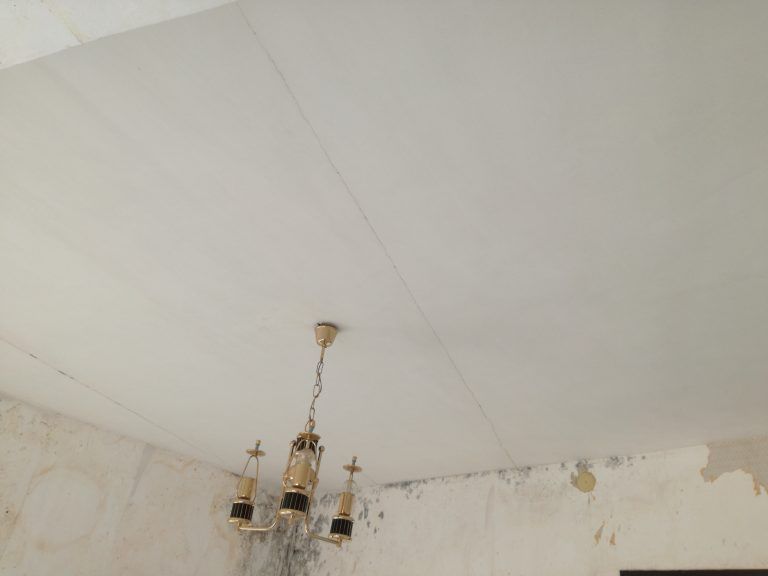
If the crack comes with stains, yellowish rings, blistering paint or dripping, there is most likely a leak from the roof, a terrace or the plumbing of the home above. In that case the crack is only the symptom: the real damage is damp caused by water ingress, which must be traced and repaired at source.
Also ask for an urgent inspection if the ceiling is bulging, if plaster is coming away, if there is visible deformation or if the cracks are growing quickly. These can point to a problem with the floor slab, which is a structural element, and in that case the guarantee period and the liable parties change.
Time limit for claiming ceiling cracks
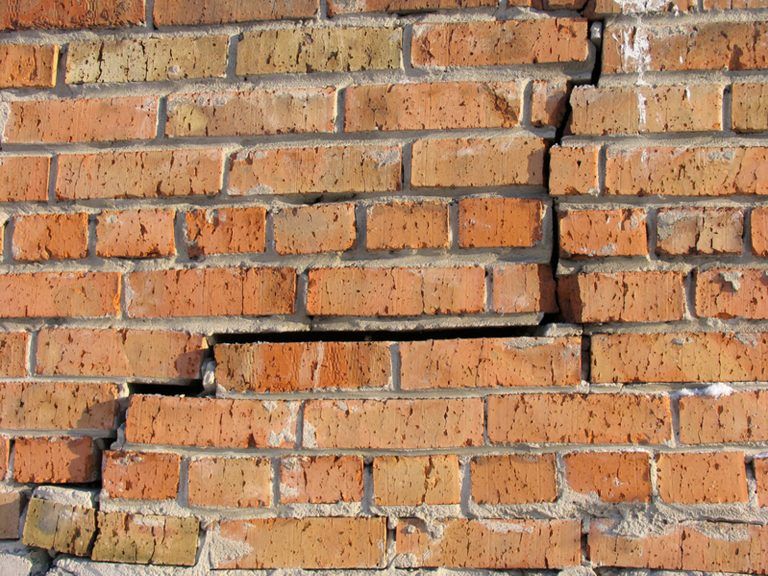
If the cracks are caused by a defect in the building elements that affects the habitability of the home, the parties involved in the construction are liable for 3 years from the handover of the works (article 17.1.b of the LOE). If they only affect the finishes, the building contractor is liable for 1 year, and if they have a structural cause the guarantee is 10 years.
Once the damage has appeared within those periods, you have 2 years to bring legal action (article 18 of the LOE). Against the developer who sold the property, there is also a contractual liability claim, with a five-year time limit. If you have doubts about your case, contact us as soon as possible: the time limits run from the moment the damage appears.
How to claim for ceiling cracks
- Do not paint over or fill the cracks before an expert has seen them: the evidence would be lost.
- Take dated photographs and, if there are damp stains, note when they appear (for example, after rain).
- Commission an expert report that identifies the cause, whether the slab is affected and the cost of the repair.
- Send a formal demand (burofax) to the developer and the building contractor and, if they do not respond, go to court with our lawyers.
In residential communities, cracks in the ceilings of top-floor homes often originate in the roof, which is a communal element: in that case the claim is brought by the homeowners’ association.
Have cracks appeared in your home?
A DPCON expert architect will inspect the cracks, find out what is causing them and tell you whether you can claim for them, and from whom.
Other types of cracks
See also the other types of cracks we claim for:
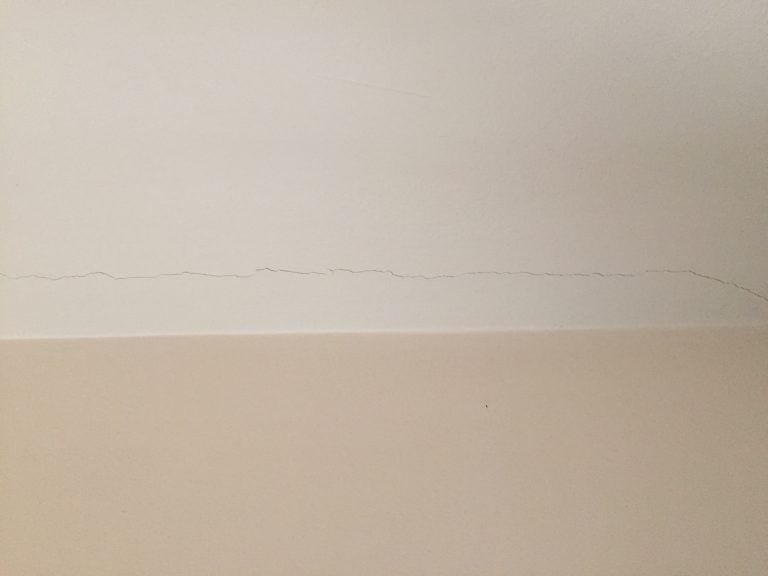
Horizontal cracks in walls
Straight lines along partition walls, near the ceiling, the skirting or where materials meet.