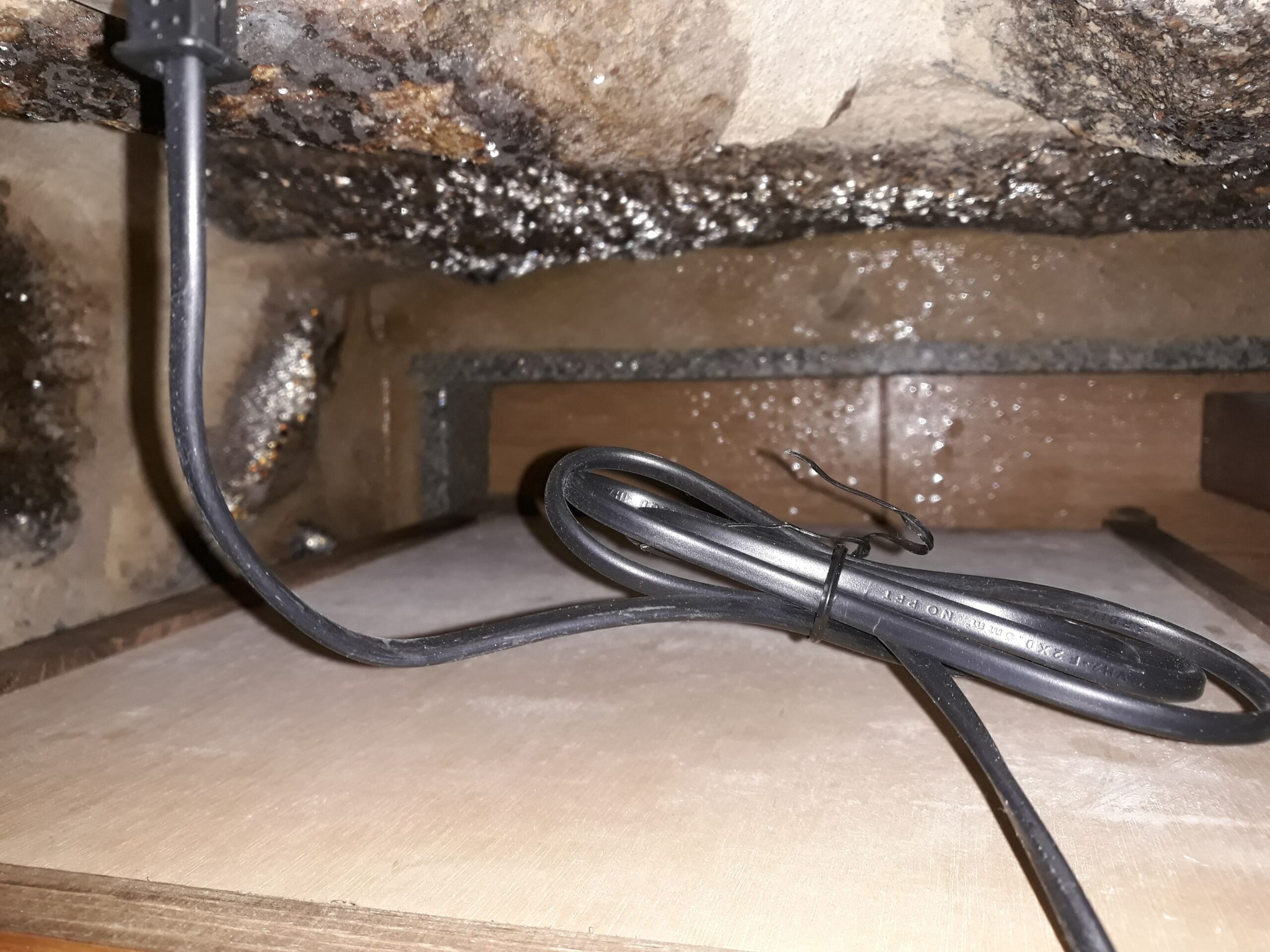
This type of damp (ingress damp) occurs when water penetrates from the outside into the interior. Causes include burst water pipes, poor water drainage at windows and doors, defective drainage, problems with the downpipe, rain leaks, a poorly sealed pipe joint, etc.
Occasionally, a one-off defect can have a costly solution. This is the case, for example, with poorly executed waterproofing membranes. A membrane that was defectively executed during construction will, in the long run, lead to leaks. Depending on the surface beneath which it was laid, replacing it may be more or less laborious, with the economic cost that entails.
Liability for leaks in buildings
On the market you can find many varied methods of eliminating this damp without building work: chemical treatments, hygroconvectors, electro-osmosis, electrical barriers, electromagnetism, dehumidifiers, special resins, etc. However, before resorting to these solutions and accepting the damage as your own, with the owner paying for these treatments to return the building to a proper state, you should first consider how it reached this point and who is responsible.
The first starting point is the age of the property. As a general rule, if the property was bought less than 5 years ago, you have a free hand to claim for this type of defect (sometimes this period is reduced to 3 years, depending on who is responsible). In any case, it does no harm to take good advice before making a decision.
How the process of claiming for leak damage works
The first step, as we say, is to commission an expert report from a specialist who understands building pathologies and can determine the cause or origin of the leaks. The report should also include a suitable repair proposal that addresses the origin of the leaks so they are properly repaired, with an economic valuation of the repair. Once the expert report is complete, a lawsuit can be filed, in which a lawyer specialising in construction law can sue those responsible for the leaks within the legal time limit.
Before going to court, and on the basis of the expert report, those responsible can be formally required, within a short period, to deal with the leaks, either by repairing them in the way indicated by our pathology experts, using a repair method that ensures the damp does not reappear, or alternatively by paying compensation in the amount budgeted by the experts. Once this route has been exhausted, it will be necessary to sue in court, normally opting for compensation as the second option.