If you have noticed with concern that your home has cracks affecting the structure, you should act. The first step is to have the property inspected by an expert architect, who can assess the damage, determine its cause and propose a suitable repair. Once this has been established, you can claim against those responsible.
The causes of cracks in dwellings or buildings can vary. They may be related to differential settlement, which leads to different types of cracks such as diagonal or staggered cracks. They may also be related to foundation problems, either because the foundation has failed or because it has caused problems in the pillars, or to ground subsidence.
Where generalised cracks appear, their movement must be monitored over different periods of time using crack gauges. If they are still active, this is a clear sign that the foundation as designed was inadequate. If the architect has not properly checked the real condition of the ground (its nature, hardness, compaction, etc.) through geotechnical studies, tests, penetrometers and so on, and does not adapt the choice of foundation to that geological reality, there is undoubtedly a significant risk of foundation failure and differential settlement. It is the architect’s duty, under the lex artis and their professional responsibility, to know the ground on which they build.
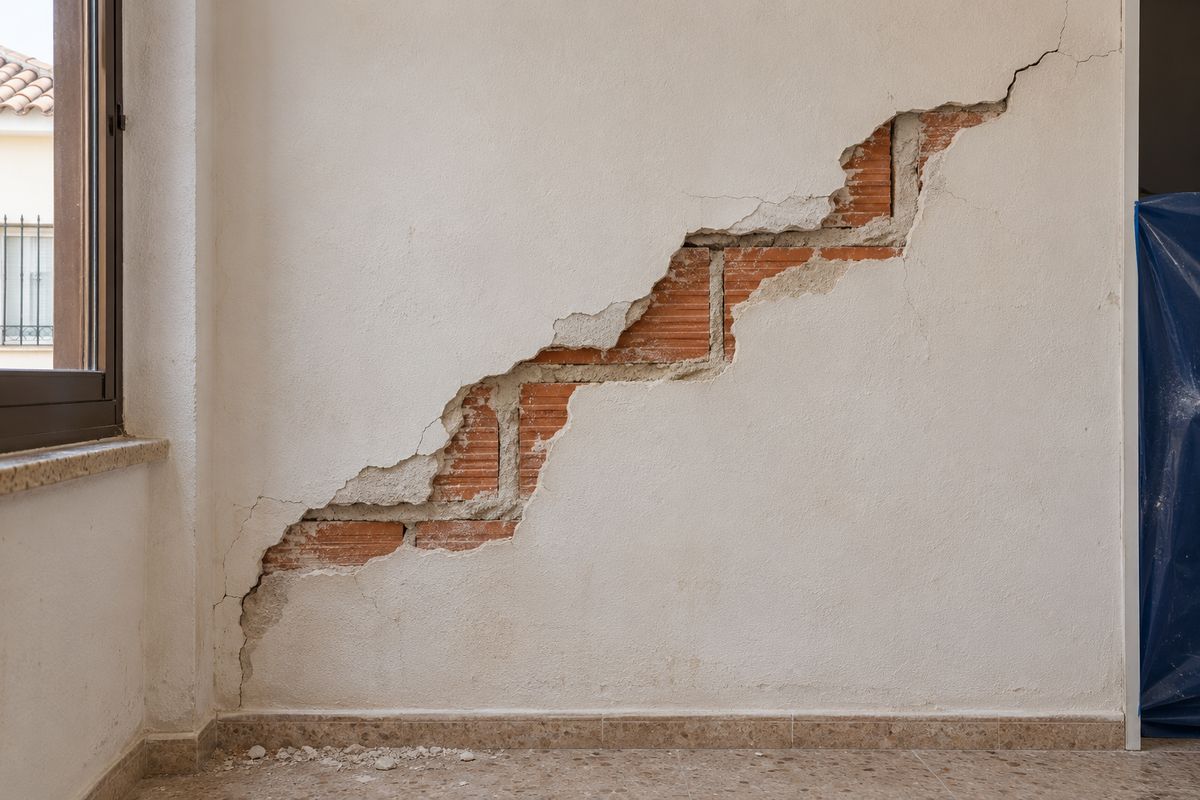
Dangerous cracks in walls
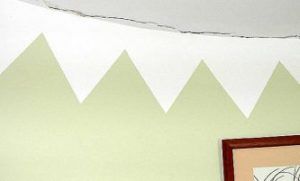
Zigzag cracks in walls
If you have zigzag-shaped cracks in your home’s walls, be careful: they may indicate differential settlement.
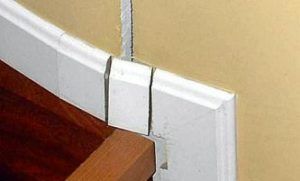
Ceiling cracks
If you notice cracks in your ceiling, they may be harmless or they may point to structural issues.
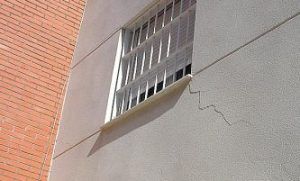
Floor cracks
Floor cracks can result from material shrinkage, a lack of expansion joints, or potentially something more serious.
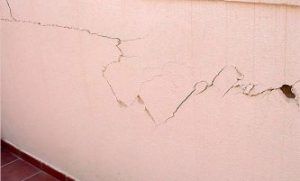
Façade cracks
A newly built structure should not normally show façade cracks. They can range from minor cosmetic issues to serious structural damage.
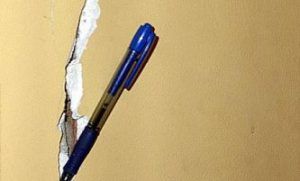
Cracks in wall finishes
Damage to finishing or coating elements in a newly delivered property.
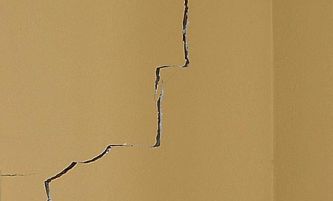
Cracks in walls
A newly built structure should not have wall cracks. They may be minor or may indicate structural problems.
How to claim for cracks in walls
To claim for this type of damage you need a technical report: an expert report drawn up by an expert in construction damage, who can determine the cause of the crack and its seriousness and propose an appropriate repair that addresses the source of the problem, not only the surface.
On the basis of this report, a claim can be made against those responsible for the construction or against the seller of the property. Different actions are available: the guarantees under the Spanish Building Act (LOE), which makes each participant in the construction responsible within their own area of responsibility, or an action for contractual liability under article 1101 of the Civil Code against the parties contracted, for delivering something that does not conform to what was agreed.
Time limits for crack claims
The Spanish Building Act (LOE) provides a ten-year guarantee period for this type of damage. Under article 17.1 a) of the LOE, the parties potentially responsible are liable for ten years for material damage to the building caused by defects affecting the foundation, supports, beams, slabs, load-bearing walls or other structural elements that directly compromise the strength and stability of the building.
This ten-year period runs from the handover of the property. Damage that appears within it can be claimed for. However, once the damage has been established, there is a period of 2 years to sue those responsible, under article 18 of the LOE. Where the claim is for contractual liability against the seller/developer or the parties to the contract, the time limit is 5 years.
If you have any questions, please contact us.