One of the biggest and most unpleasant problems homeowners face is damp in their home. In order to bring a legal claim and resolve the damage caused by damp in a house, you first need to know what kind of damp we are talking about, so that you know the time limits for claiming, who to claim against and how to fix it.
There are essentially four types:
- Accidental damp.
- Rising damp.
- Condensation.
- Or damp caused by water ingress.
Accidental damp appears accidentally as a result of a break in an installation that carries water, such as a pipe. The damp problem is highly localised in one specific spot, and the solution is to locate and repair the damaged pipe. It may be caused by the neighbour upstairs, by a communal downpipe, etc. A non-contractual liability claim could be brought against whoever caused the problem within 1 year.
Rising damp develops and spreads from the bottom upwards, and can arise when the ground is very wet and the foundations are not properly insulated. It shows up as blackish stains on the walls of basements and garages, but it can even rise to upper floors through the inside of the walls, damaging the mortar, concrete or bricks. To prevent it, proper waterproofing must be carried out around the entire perimeter of the building, in the area in contact with the ground, starting from the foundations. It breaches a basic building requirement because it affects the habitability of the home. A claim can be brought against those responsible for the construction within 3 years, or against the developer for breach of contract within 5 years.
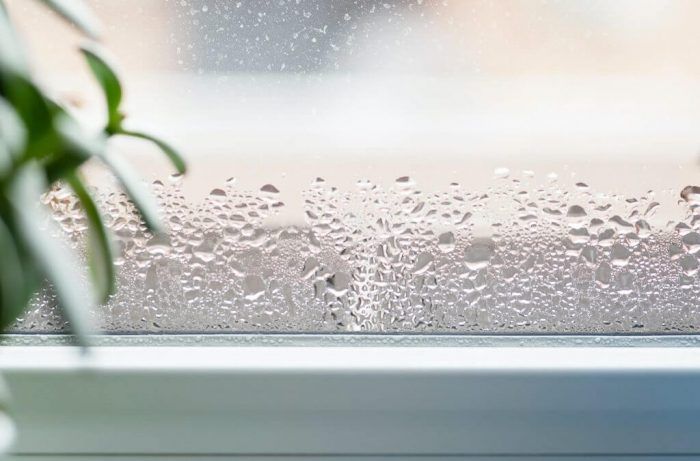
Condensation occurs when there is high humidity and the water vapour in the air comes into contact with a very cold surface (walls, windows or tiles), turning into water droplets that build up until they create blackish damp, producing mould and bad smells. At other times it is caused by a lack of ventilation.
To prevent condensation, it is also advisable to have good insulation on the walls of the building that are in contact with the outside, so as to avoid an excessive temperature difference being transmitted between inside and outside, and to install well-insulated windows with thermal break frames.
Damp caused by water ingress occurs when water from outside or from pipework finds a direct way into the home, seeping through porous materials or defective structures.
Ceilings may have small leaks; interior walls may be affected by small leaks in water pipes; exterior walls by poor waterproofing of the façade; basements and garages by a lack of waterproofing on their underground walls; and bathroom fittings by deterioration of the joints with the floor or walls, or between the bath or shower and the tiles.
Good ventilation is obviously essential to prevent all kinds of damp, but when the problem is severe and there is no way of getting rid of it, the only alternative is a lawsuit so that the parties involved in the construction are held liable, since something was done wrong (it should be pointed out that each type of damp has its own time limit for claiming against the professional responsible).
Both types of damp (condensation and water ingress) mean that the basic habitability requirement for buildings is not met. A claim can be brought against those responsible for the construction within 3 years, or against the developer for breach of contract within 5 years.
To provide evidence of the damage described, it is sometimes advisable to use thermal imaging cameras. These cameras distinguish warm areas from cold ones, with warm areas shown in red and cold areas shown in blue in the images. They are used by the independent experts who prepare expert reports, documents that are essential to prove to the judge the origin of the damage, the type of damp and, consequently, who is responsible for it: the developer, the building contractor, the architect acting as works director or the technical architect, by studying the origin of the damage and who was responsible for its execution.
Thus, if the problem lies in the insulation of the structure where the ground is damp, liability points to the architect acting as works director; failures in supervising the works point to the quantity surveyor; and if the damage affects habitability but its origin is unknown, then the liability of the developer as seller for partial breach of the sale contract should be considered.
DPcon Reclamación Daños Constructivos.
Any questions?