So that there is no differential settlement or structural problems.
These are the main types of foundations used in construction, depending on the nature of the ground, classified into the following groups:
- Shallow foundations:
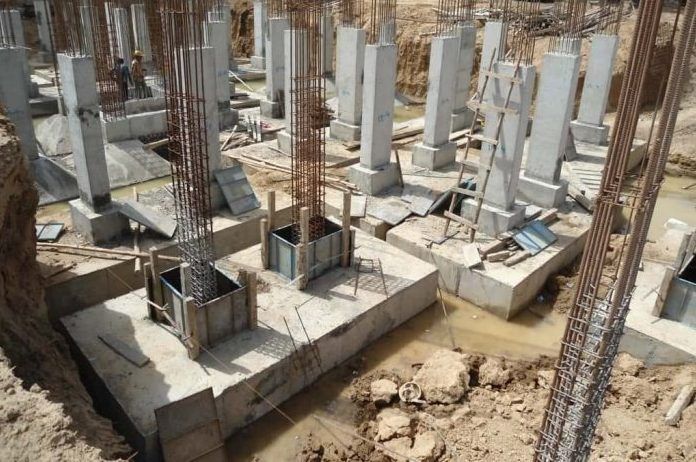
These are built using “footings“, which may be isolated, combined, or strip and grid footings.
A footing is a block of reinforced concrete with a rectangular base, on which a column or structural element normally rests. Depending on the nature of the ground, footings are laid out individually (firm, homogeneous ground), joined together to form a combined structure, or all tied to one another with tie beams (when the ground is more heterogeneous and has lower bearing capacity).
And raft. Where the ground is less favourable, the footing becomes fully continuous and a “reinforced raft” is built.
- Deep foundations:
These are used when the ground is not suitable for footings, because it is necessary to go very deep to reach firm ground.
There are many types of deep foundations, depending on materials, length, thickness, etc. But depending on where they are located, they will be:
-Isolated piles
-Pile groups
-Piled areas
-Micropiles.
Depending on the information provided by the geotechnical survey, which must be carried out before a property is built, on the nature of the ground (its hardness, compaction, homogeneity, etc.), some types of foundations are recommended over others. The designer must have taken this into account when designing one type of foundation or another; if not, it is very likely to have an adverse effect on the structure, and structural damage will appear. DPcon Reclamación Daños Constructivos.
Any questions?