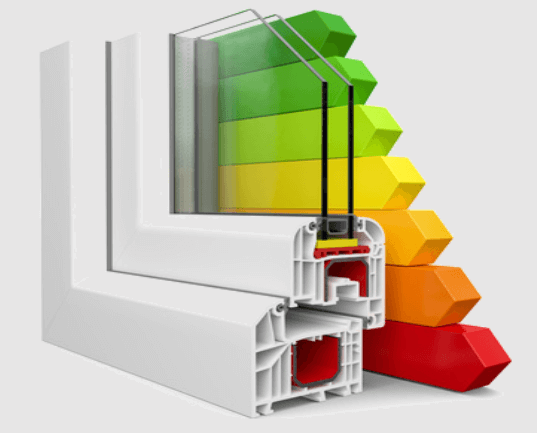
To improve the habitability of a home it is advisable to avoid loss of energy efficiency and troublesome condensation. Condensation occurs when, between two environments with a significant temperature difference (outside and inside), the building envelope, which should insulate against the transmission of cold and therefore not transmit that temperature difference, fails to do so and creates a “thermal bridge” through which the temperature difference is transmitted. With the warmth inside, moisture condenses, forming droplets just as happens on the mirror when we get out of the shower.
The Technical Building Code (CTE) defines a thermal bridge as an area of the building’s thermal envelope where there is a break in the uniformity of the construction, whether due to a change in the thickness of the envelope or in the materials used, the full or partial penetration of construction elements with different conductivity, the difference between the external and internal area of the element, etc., resulting in reduced thermal resistance compared with the rest of the envelope.
This happens, for example, when the envelope or the window joinery is not designed to break the thermal bridge. One example is traditional aluminium windows, as aluminium is a natural conductor of heat (or of its absence).
Classification of thermal bridges in the CTE:
Depending on their location and nature, Basic Document HE on energy saving establishes the following classification of thermal bridges:
a) Thermal bridges integrated into the envelope:
- columns integrated into the façade envelope.
- perimeters of openings and rooflights.
- roller shutter boxes.
- other integrated thermal bridges.
b) Thermal bridges formed at junctions between envelope elements:
- floor slab edges on façades.
- roof-to-façade junctions.
- roofs with parapets.
- roofs without parapets.
- junctions between façades and envelope elements in contact with the ground.
- junction between façade and ground-bearing slab.
- junction between façade and basement or retaining wall.
c) Façade corners or junctions, which, depending on the position of the outdoor environment, are subdivided into:
- internal corners.
- external corners.
d) Junctions between cantilevers and façades;
e) Junctions between internal partitions and the external envelope.
For window and door frames specifically, most manufacturers on the market place insulating solutions or materials that are poor conductors of heat between the outer and inner faces of the joinery, such as thermoplastic products with polyamide strips, which provide an effective thermal break.
In any case, nowadays there are sufficient technical solutions to avoid, during construction, these troublesome thermal bridges, which undoubtedly affect the habitability of the home and reduce its energy efficiency. So if you have a problem, do not hesitate to make a claim.
Any questions?