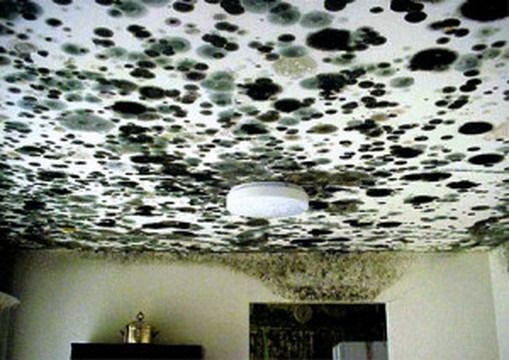
Calculating the limitation period for condensation damp
(*) A real query which, given how frequent and important it is, we reproduce as a very common query/answer, omitting its origin and leaving out any details that might reveal the person’s identity.
QUERY.
“Barely a month ago I sent the developer a formal demand claiming for condensation damage in my home. The thing is, I think I put my foot in it, because I said in the formal demand that I had had this damp for two years. Could it be argued against me that I let 2 years go by after becoming aware of the damp, and that my claim is time-barred?”
ANSWER:
Defects in a building, and specifically condensation, are not damage that occurs at a particular moment in the life of the building (as if lightning struck and damaged the roof of the house in an instant). The cause obviously exists from the moment the home was badly built, but the consumer did not know the origin of the condensation, the damp and the bad smells when they first began to suffer them.
They did not know how serious the damage was, nor whether it could technically be claimed for. Only when it was technically classified as condensation, by a technical expert, did they learn and have it explained what it really is, and where and why the damp comes from.
Before that, the consumer or owner of the home might have thought that the damp was something temporary, perhaps caused by the humid climate of the area, or because the paint in the house had not dried, or even by a leak, or even by not ventilating the home often enough. The cause of the condensation was not known with certainty, nor whether the defect was temporary or permanent, nor even whether it was really a building defect.
Only when a professional confirms that it is CONDENSATION DAMP is the damp classified as damage that can be claimed for, because it is established that it is permanent and attributable to the parties involved in the construction (and not, for example, to humidity in the air).
But obviously, if the formal demand intended to interrupt the limitation period mentioned that the damp had been “suffered” before the demand (within the previous two years), this should not mean that, because they were aware of the damp two years earlier, the owner has lost the opportunity to claim. That would be unfair and untrue.
The nature and certainty of the damp did not appear suddenly; it developed little by little, until a point came when, for the owner, it had become constant, dirty, a breeding ground for mould, and permanent. And that is when a technical expert classifies it as such.
Bear in mind that condensation is a rather complicated physical process, combining the dew point with the adhesion of tiny droplets to the walls, which turn into mould or fungi through a chemical process; moreover, it is caused by the different coefficients of heat and cold transmission through the joined masonry materials of the building that are in contact with the outside and do not break the thermal bridges, because the building contractor has left out the insulation.
It is not harmless, as it causes chronic colds and is harmful to asthmatics. It is impossible to know that it is condensation caused by thermal bridges unless a professional examines it.
Can it be assumed that the owner was aware of this condensation from the very beginning?
The owner DID suffer it. But they categorically DID NOT know about it.
The owner suffered it, because the defect was always there, from the start; but only when they send the formal demand and the limitation period is interrupted do they know for certain that the damp is not the result of the environment, nor of the orientation of the home, nor of a lack of ventilation, but of the whole physical and chemical process and of the defective construction that has come to light over time (but through a professional).
Any questions?