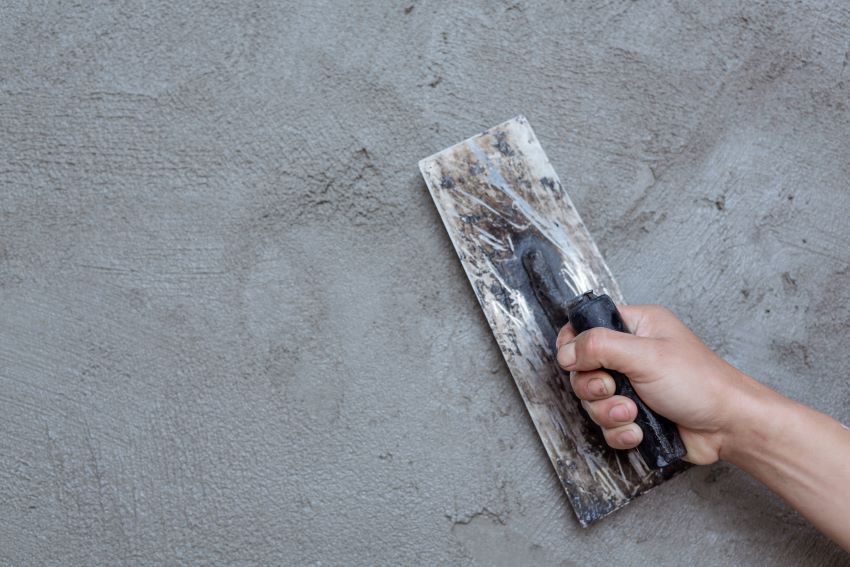
Examples of habitability damage and defects in finishes.
Below we look at the difference between defects in finishes and habitability defects, since many claims made by owners to developers or other liable parties are answered by describing the damage as “damage to finishes or aesthetic damage”, in order to play it down and, above all, so that the time limit is considered to have expired.
Defects in finishes: guarantee period of 1 year. These are the least serious cases, referring only to situations where there are flaws in the works caused by poor workmanship and linked to the finishing of the building. Under the LOE only the building contractor is liable for them, because they are of such minor significance that they fall outside the supervision and oversight of the site manager. In many cases they will be purely aesthetic defects, many of which were excluded from liability under article 1591 of the Civil Code because they were ordinary imperfections that could not be equated with the notion of ruin, although in some cases they came to be covered by the notion of “aesthetic ruin”. The following can therefore be classed as defects in finishes: failure to clean up after the works, poor paint finish, poor finishing of elements, scratched doors, scratched windows, stained tiles and similar defects. The same applies to similar damage that may be found in communal areas, whether in entrance halls, children’s play areas, sports areas, swimming pools, etc.
However, most of the damage suffered by homeowners’ associations cannot be classed as defects in the finishing of the building. Most of it cannot be so minor as to be of merely aesthetic significance, without further harm. Most of it impairs or may affect the habitability of the homes, and can therefore fall within the 3-year guarantee period.
Habitability defects: guarantee period of 3 years. These are less serious than structural defects, since they do not compromise the stability of the building but rather affect its habitability. Furthermore, unlike the previous case, which requires the defect to affect the structural elements of the building, here the defects may appear in the construction elements or in the installations. This area has become increasingly important owing to greater awareness of the need for buildings to meet minimum quality standards, now set out in the Technical Building Code (CTE). Thus, in recent times, and in view of the administrative regulations on the matter, the quality of buildings seems to be becoming a matter of public policy. The most common defects are: poor waterproofing, which causes water ingress, damp, mould and fungi, etc.; poor thermal insulation (excessive heat/cold) and sound insulation (noise); faults in the ventilation shunts, which cause bad smells; cracks and hairline cracks (that do not affect the structure or foundations); faults in the electrical and telecommunications installations, etc., and any damage or problem that may impair the comfort and habitability of the homes.
If you have any questions, contact us. DPcon Reclamaciones Daños Constructivos.
Any questions?