There is no need to try to “move heaven and earth”
An event recently took place, and reached the media, that has shocked public opinion.
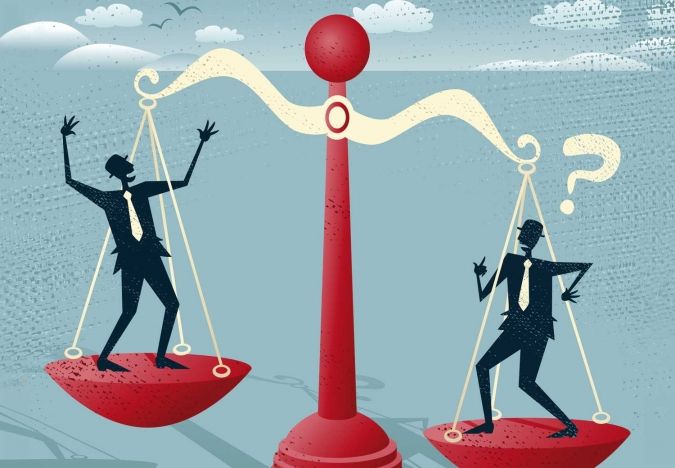
How is it possible that, within the Supreme Court, some judges say who must pay the taxes on bank mortgages, and then others come along and say the opposite?
And later, to round things off, the President of the High Court appears and says that he had not been aware of it, and, after calling an urgent plenary meeting, almost half support one view and the other half plus one or two judges support another.
And let no one tell us that, on the basis of freedom or independence of thought, each judge has the right to express their wise and honest opinion. No. They do not have that right. They may be very wise, intelligent and so on, but they do not have that right, because if that were so there would be no doctrine, no case law, no interpretative criteria, and everything would be chaos. What matters most to lawyers is being told what the rules are.
And this is what lawyers say, who in their work ask for only one thing: “Agree among yourselves”. Tell us the rules of the game and we lawyers will follow them. But do not give us three or four different versions or approaches, no. It cannot be that each judge believes that he alone is going to set a trend, however clever and well prepared he may think he is.
And here is an example concerning construction defects covered by the LOE.
If there is a rebuttable “iuris tantum” presumption of professional fault with a reversal of the burden of proof, and the judge considers the damage proven (Pathology: cracks and hairline cracks, through-cracks that allow you to see right into the partition wall and even put a finger in) but does not go on to investigate its cause, or who is liable, there is in these cases a reversal of the burden of proof. This is because the liability under the LOE invoked in these lawsuits derives from the ten-year liability under article 1591 of the Civil Code, under which the burden of proof is reversed, so that once it has been proven that the construction is defective, it is for the defendants to show that they played no part in causing the damage to the home and are not liable for it.
Otherwise, it would amount to accepting as natural that a new build should be widely affected by cracks and hairline cracks, with no one held liable at all, the defendants not having shown that they were due to unforeseeable circumstances, force majeure, the act of a third party or the injured party’s own act.
- IT IS NOT ACCEPTABLE THAT, ONCE THE DAMAGE HAS BEEN PROVEN, A JUDGMENT FINDING LIABILITY CANNOT BE HANDED DOWN SIMPLY BECAUSE ITS CAUSE HAS NOT BEEN MADE SUFFICIENTLY CLEAR, AS THAT WOULD AMOUNT TO ACCEPTING AS “NATURAL” THAT A NEW BUILD SHOULD BE WIDELY AFFECTED BY CRACKS AND HAIRLINE CRACKS, WITH NO ONE HELD LIABLE AT ALL.
This is what article 17.2 of the LOE states, with article 17.3 as an exception, and it is consistent with established case law – for example Supreme Court judgment (STS) 509/2015 of 17 September –, as established by repeated case law (Supreme Court judgments of 22 March 1997; 21 May 1999; 16 December 2000; 17 July 2006)”.
And, above all, the Supreme Court judgment of 28 April 2008 reasons that “… once it has been proven that a construction is defective, it will be presumed that there was a negligent act or omission by the agent, who will always be liable for the damage unless circumstances exist that defeat the action, so that the lack of evidence as to the origin of the damage does not fall on the claimants, who need only prove that the ruin exists and that it occurred and became apparent within the ten-year period, but on the defendants (Supreme Court judgments of 29 November 1993; 31 May 2000).
The above, which ought to be the ABC, always, always, always, in all courts and in all Provincial Courts, is not in fact the case.
Some accept it and reflect it, and others say the opposite. We are not saying that the latter do not give reasons. They ignore it and/or reason the opposite, better or worse, but they do so by complicating judgments and creating great legal uncertainty; and that is not right. Those judges must stop thinking that they are doing something very complicated and clever that will be a milestone in justice, because they need only follow the established doctrine to the letter. (There is no need to move heaven and earth.)
And for those cases in which the judge or court departs from the rules of the game – and invoking their sacred principle of independence is no excuse – a procedure must be put in place to correct it, because otherwise we will have chaos, and justice will depend largely on “which judge you happen to get”. And neither lawyers nor the most purist judges want that.
Any questions?