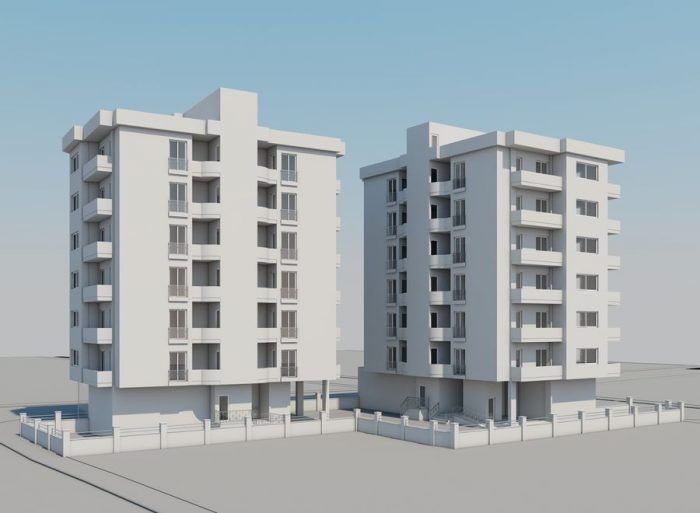
What happens if an adjoining building claims against ours for construction defects that are affecting it.
Sometimes, as a result of construction defects in a new residential development, damage is caused to the adjoining property, even though this is in no way the fault of the homeowners’ association, being due exclusively to defects in the execution or design of the works and not to misuse or lack of maintenance.
For example, when leaks from the swimming pool of a new residential development cause damp in the adjoining property, or when a wall with poor foundations threatening to collapse may damage the neighbouring property.
How should the homeowners’ association facing the claim proceed?
First, be aware that the adjoining neighbour may claim directly against your residential development, since they should not have to put up with the damage being caused to them. They may bring an action against the individual or company whose presumably negligent conduct has caused the damage to the adjoining property, under the non-contractual liability provided for in article 1902 of the Civil Code.
But for this, the homeowners’ association where the damage originates must prove that there has been no fault or negligence on its part. It must exercise due diligence, have claimed (out of court or in court) against the parties involved in the construction responsible for the damage, notify its own insurer, and prove that there is no negligence on its part aggravating the neighbour’s damage.
It may even, if forced to, take on the repair of the neighbour’s damage and then recover from the developer and the other liable parties the amount it has had to pay for the harm caused to a third party.
If attempts at an out-of-court solution ultimately fail and the neighbouring property has sued the homeowners’ association, all of this could be argued, and a stay could even be sought because the matter is “sub iudice”, that is, pending resolution by the courts in the claim for that damage (and its consequences) against the developer or the parties responsible for the construction.
However, as we say, it must in any event be shown that the homeowners’ association where the construction defects affecting the neighbours are located has not acted negligently through neglect or omission, but has acted diligently in order to resolve the harm to the neighbouring property.
If you have a problem of this kind, contact us so that we can advise you on both the technical and legal aspects. DPcon Reclamación Daños constructivos.
Any questions?