(*) A real enquiry, which we reproduce as a question and answer because it comes up so often and is so important:
I am going to buy a second-hand home, and I would like to know how long the guarantee covers me for anything that happens in the home: burst pipes, damp, structural problems, aluminosis, etc. The home seems fine at first sight.
Answer to the enquiry:
We start from two assumptions:
1. That you intend to buy a home that has already been lived in from a private individual, and
2. That the home was completed more than 10 years ago, that is, the Certificate of Completion was signed more than 10 years ago.
If so, you only have 6 months from the date of the purchase deed signed before the notary to claim for “latent defects in the house”.
How, and in what cases, can you claim for those latent defects?
When there is a serious defect in the house that was not visible and that you could not have known about at the time of purchase, and which, once it comes to light, makes the house unfit for use or reduces its usefulness so much that you, as the buyer, would not have bought it, or would at least have paid less for it. In other words, the defect must be very serious.
This is what the Civil Code says, in article 1484:
“The seller shall be bound by the warranty against defects for hidden defects in the thing sold if they make it unfit for the use for which it is intended, or if they reduce that use to such an extent that, had the buyer known of them, he would not have acquired it or would have paid a lower price for it; but he shall not be liable for manifest or visible defects, nor for those that are not visible if the buyer is an expert who, by reason of his trade or profession, ought easily to have known of them”.
If the buyer (you) is an architect, quantity surveyor, etc., the seller will not be liable either, for certain types of defect (defects that have nothing to do with the buyer’s own speciality).
It is also worth stressing that the period for claiming for latent defects expires after 6 months, and we say “expires” rather than “becomes time-barred” because, as it is an expiry period, it cannot be interrupted with a notarial demand or a burofax (formal registered letter). So if no lawsuit is filed within six months of the purchase, the period expires, it is over, and nothing more can be claimed. Even if the defect appears in the seventh month, nothing can be done.
You will probably wonder about this, because you have heard that the law covers guarantees for up to 10 years (1, 3 or 10 years, depending on whether they are defects in finishes, habitability defects or structural defects). But that does not apply here, because those periods run from the Certificate of Completion, and we have assumed that the house you intend to buy is more than 10 years old, so none of those guarantees cover you any longer.
In short, a second-hand house more than 10 years old is “thin” on legal guarantees, since six months is nothing.
All you can do is be vigilant: visit the home again and inspect it thoroughly before buying it, and be wary of anyone who tells you “that is nothing to worry about”. Take photos, and if you see or suspect anything odd, get advice.
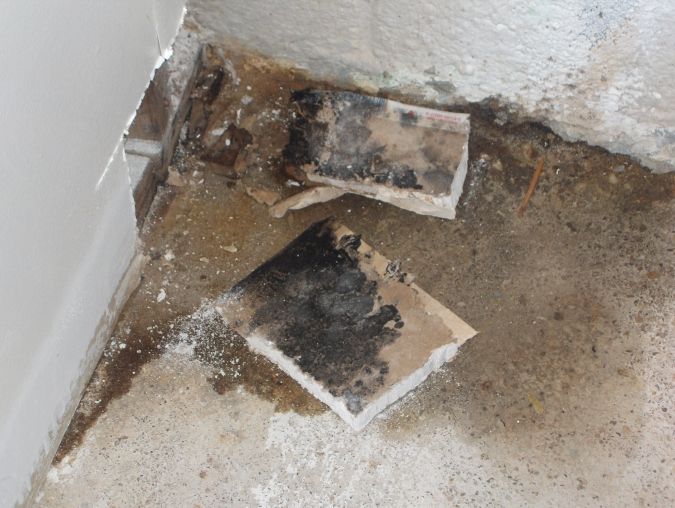
A hairline crack may be “nothing”, or it may be the start of a large crack caused by differential settlement, which is the cancer of buildings. Look in the corners of the rooms, check that there is no smell of damp and that the damp has not been disguised with a coat of paint or other cosmetic touches. As for cracks or concrete diseases that cause degradation and loss of strength (aluminosis), these are more serious matters that cannot be explained even briefly in this short note, but we can at least say this: if you have heard anything about cracks or aluminosis, and there have been similar cases in that development, our only suggestion is that you walk away from the purchase and look for another house.
Any questions?