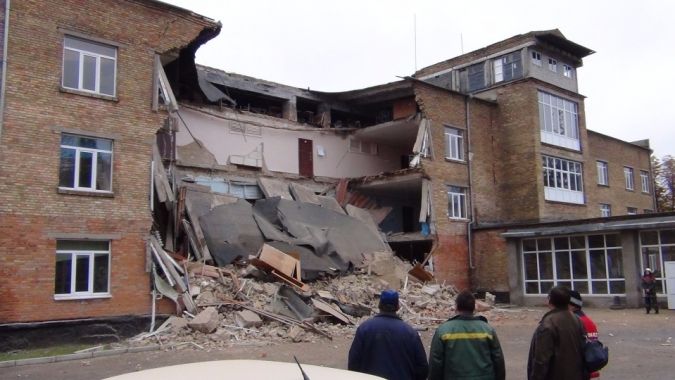
What is the legal position of the owners of a building that has collapsed?
We receive enquiries from owners about the partial or total collapse of their building, for no apparent cause or reason. These are usually buildings more than 50 years old.
In a situation like this, what should you do? Who is liable? What can the owners do?
The question of liability depends on the origin of the collapse.
- Due to works on the building, whether on the ground floor or in one of the flats. In that case there will be a party liable, whether the building contractor or the site management (architect and/or quantity surveyor); the developer of the works will not be exempt from liability either.
If cracks had previously appeared on the ground floor or in the homes, this is a “warning” that something is failing, and the works must be stopped immediately and an architect must determine whether or not it is safe to continue with them.
When a building collapses, it is clear that something has been “touched” that should not have been, whether columns, foundations, retaining walls, etc., and the problem is very serious, since the affected owners and tenants will have to leave the building for months or even years.
In this case, the owners must commission an expert report on the works that caused the collapse and on the condition of the building, in order to claim against those responsible, who will have to pay for the repair and/or compensation for the damage caused.
- Due to other causes. When a building collapses partially or completely for no apparent cause, there is obviously an origin. When the building is very old, the main cause may be aluminosis, woodworm in the timber structure, deterioration of the foundation materials, an increase in the loads the building has to bear, etc. In other words, fatigue of materials which, being old and/or poorly maintained, reach the point of collapse, apparently without any main origin or cause.
In this case, the only parties responsible are all the owners of the building, who should have maintained it and failed to do so, whether through lack of knowledge, neglect or any other reason.
Town councils open proceedings to determine the causes of such collapses, analysing the building and drawing up reports, and they decide according to the condition of the building. They may:
- Refuse to declare the building in a state of ruin. The decision itself must order the conservation or refurbishment works and any other measures needed to restore safety, health, public appearance and habitability conditions.
- Declare the building in a state of ruin. The decision must order the refurbishment or demolition of the building, setting deadlines for this, and, where appropriate, specify the works and measures needed to ensure the physical safety of the occupants and third parties.
- Declare the building in a state of partial ruin. The decision must order the measures referred to in a) for the part not declared in ruin, and, for the affected part, follow the provisions of b).
In short, the owners of the building will face having to leave it, and they will have to make decisions depending on their situation.
If they are in the first case, that is, the collapse was caused by works on their building, we can advise them both from a technical point of view (with an expert report) and from a legal point of view (by taking court action against those responsible).
If they are in the second case, unfortunately it is the owners who have to bear the cost of the repairs, and they will have no one to claim against.
Any questions?