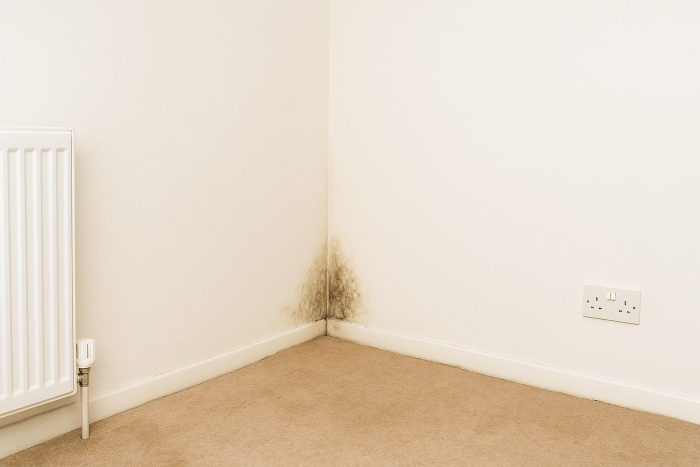
How to prevent condensation caused by thermal bridges.
A thermal bridge is an area of a building where the thermal insulation is lower than in the rest of the building, or where the nature of the material itself means it transmits more cold towards the interior, and it can cause condensation.
Why condensation forms.
Air contains water vapour, the amount of which depends on the relative humidity. When that moist air comes into contact with a surface colder than its dew point, the vapour condenses into small droplets of water. The classic example is when the steam from a hot shower comes into contact with a cold surface such as a mirror and condenses into droplets.
Typical examples of thermal bridges in homes:
-Junctions between walls and floor slabs (corners or concrete columns).
-Window frames or lintels.
-Junctions between the façade and the roof or floor.
These elements must therefore be thermally insulated to prevent them from transmitting cold and impairing the habitability of the home, since condensation can lead to an unhealthy environment, a damp smell, dark stains, and peeling paint or plaster. This damp usually appears in corners, on columns or in poorly insulated areas, exactly where there are thermal bridges.
Can thermal bridges be prevented?
Today, with current techniques and materials, it is perfectly possible to avoid thermal bridges, and avoiding them is a rule of good construction practice. In fact, the Technical Building Code establishes (in its DB-HE1) that buildings must be designed and built so that:
“The energy demand needed to achieve thermal comfort is limited according to the climate, the use and the efficiency of the building envelope, avoiding condensation and limiting thermal bridges.”
Basic Document HS1 – Protection against damp also states the following about thermal bridges:
“Building elements must be designed so as to prevent surface and interstitial condensation, especially in areas with thermal bridges.”
How to prevent the thermal bridges that cause condensation
By following the Technical Building Code, using an appropriate construction design and ensuring good workmanship.
-Installing ETICS (External Thermal Insulation Composite System, known in Spain as SATE).
-Internal thermal insulation (anti-condensation paints, polyurethane or cork panels).
-Joinery with thermal break (RPT).
-Avoiding direct connections between exterior and interior elements without continuous insulation.
-On roofs, applying insulation on the outside (inverted or ventilated roof).
-Using double or triple glazing with an argon gas cavity and low-emissivity glass.
-Applying elastic sealants and expanding tapes at the junctions between walls and joinery.
-Using polyurethane foam to close gaps between frames and walls.
– Checking with thermal imaging cameras for any cold spots that may still exist.
If you have thermal bridges that are causing condensation on a wall, you should know that this has a negative effect on the habitability of your home, which the LOE covers as damage that reduces acceptable conditions of health and watertightness, energy saving and thermal insulation, preventing comfort and satisfactory use of the building, and it must be claimed from those responsible for the construction. If you have any questions, let us know.
Any questions?