My house has cracks: how can I tell whether they are dangerous and whether they could be serious structural damage?
Four factors to bear in mind.
Cracks in several walls of a building are never a good sign. But if those cracks are symptoms of damage to the structure or foundations of the property, it can be very dangerous. If the damage is structural, it can seriously compromise the safety and stability of the property and action should be taken.
To find out whether the damage is structural, it should be assessed by an expert architect specialising in construction defects, but in the meantime we can give you a few clues to help you tell whether the damage compromises the safety of the building:
1.–Width and depth: If the cracks are wide, more than 5 mm, and deep enough to insert a key or another object. The wider they are, the more likely they are to be dangerous. The same applies if they go right through, that is, if they can be seen on both sides of the partition wall.
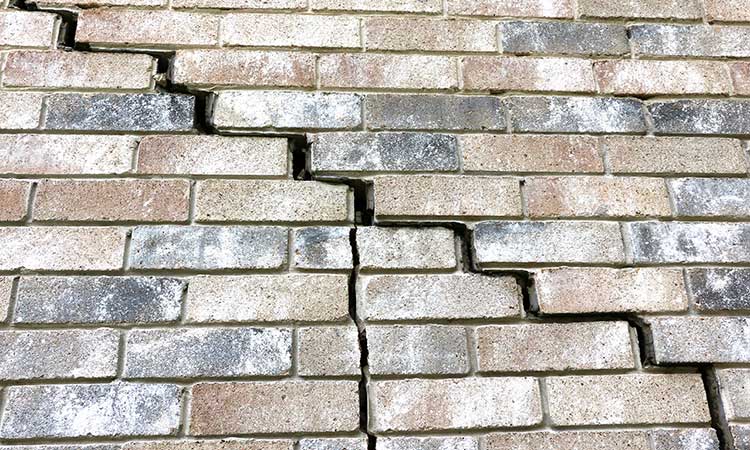
2.-The pattern of the cracks: If they run diagonally, in a zigzag or stepped pattern, or if two cracks even cross each other to form an X, they may be symptoms of pressure caused by differential settlement.
3.-The location of the cracks: If the damage appears in floor slabs, columns, load-bearing walls or other load-bearing elements of the building, it must be closely monitored.
4.- Movement: If, over the weeks, the cracks change or develop, growing, widening or evolving, this is a sign that the movement has not stopped and that the settlement is still active.
If you notice any of these characteristics in the cracks in your home, the best thing to do is to contact professionals specialising in building defects so that they can assess them and give you a diagnosis. Contact us: DPcon Reclamación Daños Constructivos.
Any questions?